Done right, done once
Mold Remediation in Portland, Maine
Remediation is more than wiping away what you can see: it's sealed containment, negative air pressure, physical removal, and fixing the moisture that fed the mold in the first place. That's the difference between a problem that's gone and a problem that's back by spring.
Free quotes · Licensed & insured local crew
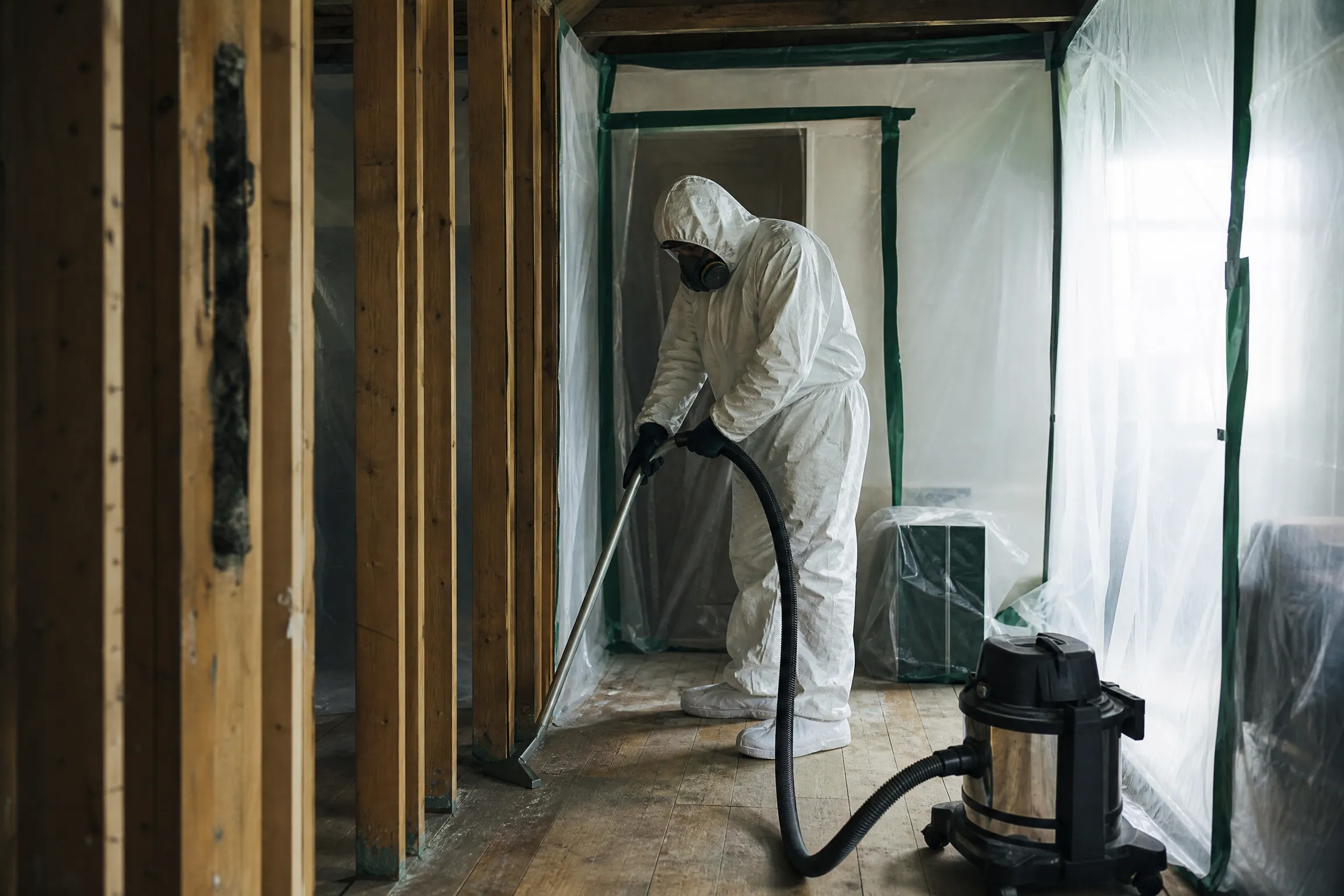
What Real Remediation Looks Like
There's a reason "we sprayed it and painted over it" is the most expensive sentence in this industry: it means the job gets done twice. Proper remediation follows a sequence, and skipping any step shows up later as a musty smell that never quite leaves.
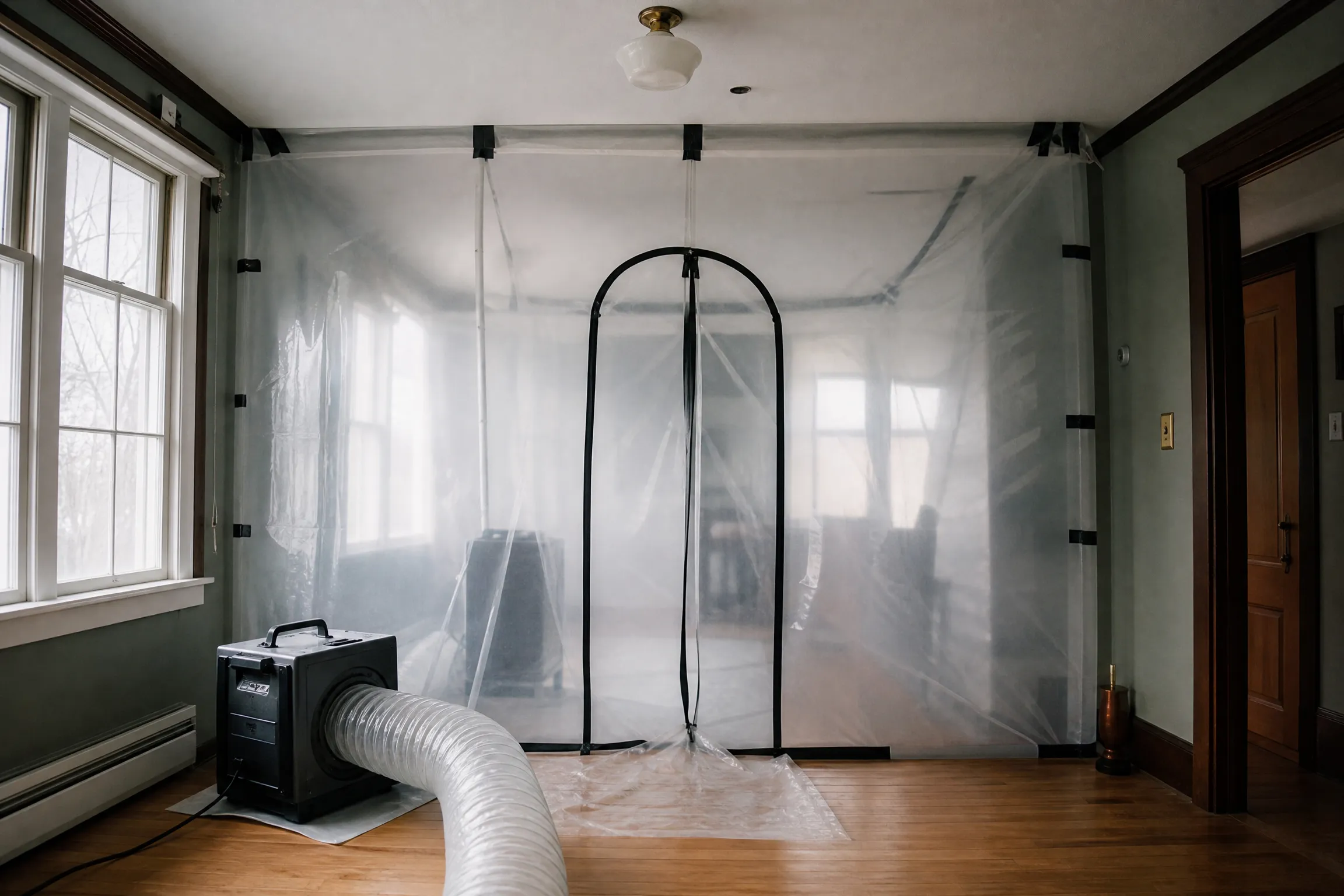
1. Trace the moisture. Every colony has a water source: foundation seepage, a roof or plumbing leak, condensation, humidity. The inspection finds it, because removing mold without cutting off its water is temporary by definition.
2. Seal the work area. Floor-to-ceiling plastic containment with a zippered entry goes up around the affected space, and a negative air machine keeps air flowing into the workspace and out through HEPA filtration, never into your living space. This is the step DIY jobs and cut-rate outfits skip, and it's why disturbing a large colony without it can make a house smell worse than before the "cleanup."
3. Remove, don't disguise. Mold gets physically removed from framing and masonry: HEPA vacuuming, damp wiping, abrasive cleaning where the growth has rooted into wood grain. Porous materials that can't be saved (moldy drywall, insulation, carpet) are bagged inside the containment and disposed of properly. Antimicrobial treatment comes after removal, not instead of it.
4. Dry, verify, prevent. The space is dried to normal moisture levels and the work area passes visual and, when needed, clearance testing. You get a practical prevention plan (typically some mix of dehumidification, drainage correction, and ventilation) so the conditions that grew the mold don't quietly rebuild it.
Common Remediation Projects in Greater Portland
- Basement mold from damp stone foundations and spring water intrusion, the region's most common call
- Attic mold after ice dams, roof leaks, or years of bathroom fans venting into the attic
- Crawl space mold in vented crawl spaces that pull in humid coastal air all summer
- Post-flood and burst-pipe cleanup, including insurance documentation
- Pre-sale remediation with written clearance for real estate transactions
Not sure how bad your situation is? Read our honest take on whether you need testing or remediation first, or what mold removal actually costs in Maine, then call for a free quote.
Common questions
Mold Remediation FAQs
Do I have to move out during mold remediation?
Usually not. The work area is sealed behind plastic containment and kept under negative air pressure, so spores and dust stay inside the workspace. For most single-area projects you can live normally in the rest of the house. Whole-home projects, or homes where someone is medically sensitive, sometimes warrant a few nights away; you'll know before work starts.
Is mold remediation permanent?
Removal is permanent for the colonies that were treated, but mold returns anywhere moisture returns. That's why every project here ends with the water problem identified and a written prevention plan (drainage, dehumidification, ventilation). If the space stays dry, the mold stays gone.
Will the moisture source be fixed too, or just the mold?
Finding the source is step one of the job, not an upsell at the end. Simple fixes (a disconnected dryer vent, a gutter dumping at the foundation) are handled as part of the project. Bigger corrections like drainage regrading or sump installation get scoped honestly so you can decide with real numbers.
How is a remediation quote calculated?
Mostly by the size of the affected area, how much porous material (drywall, insulation, carpet) has to come out, how hard the space is to access, and whether structural drying is needed. Small contained areas often run $500–$1,500; typical basement, attic, or crawl space projects fall in the $1,500–$5,000 range in Greater Portland.
Get it removed, and keep it gone
One call gets you a free quote and a licensed, insured Maine crew that removes the mold and fixes the moisture that caused it.
Call (207) 569-3512- Licensed & insured local crew
- Free quotes
- Straight answers, no scare tactics