The problem nobody looks up to see
Attic Mold Removal in Portland, Maine
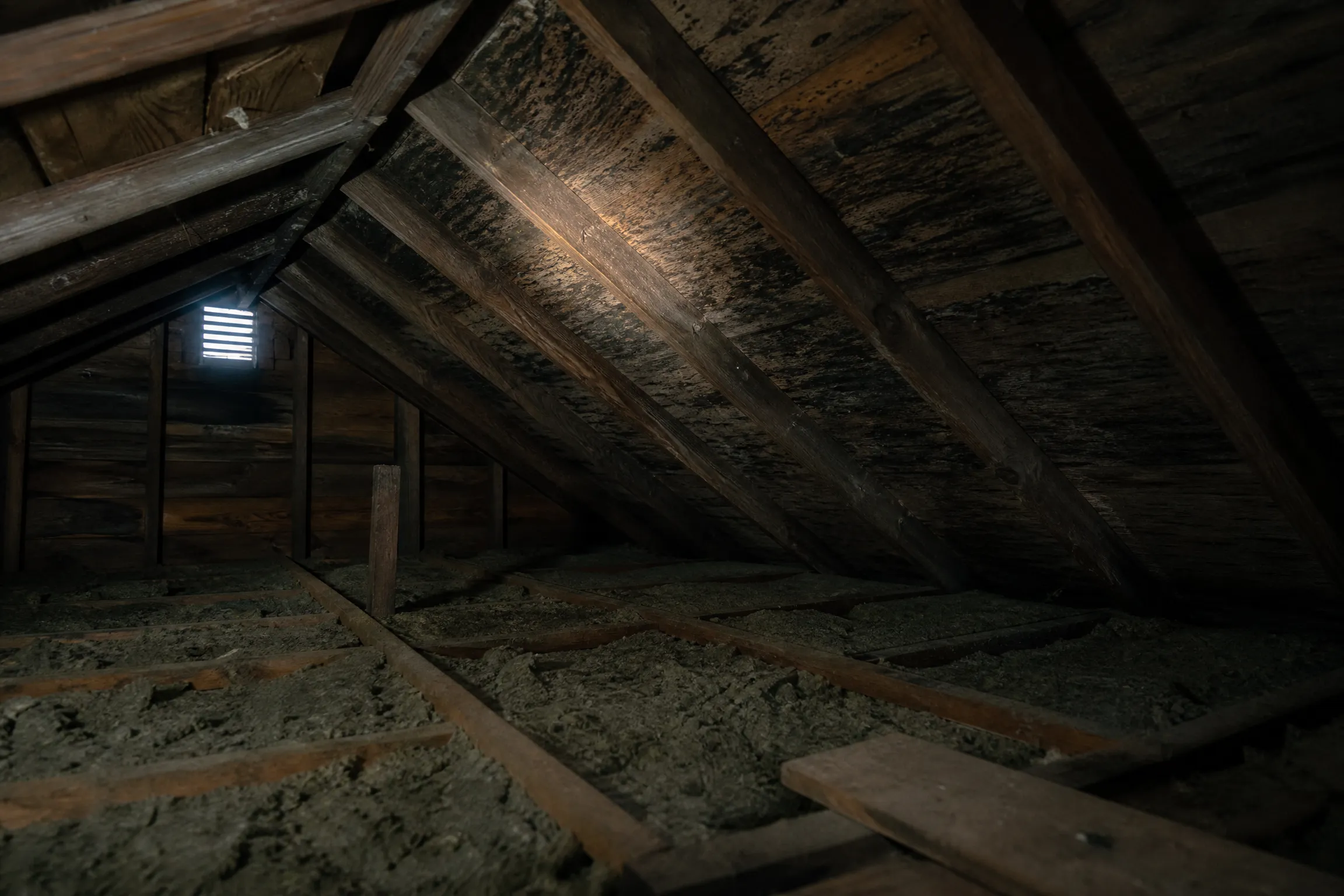
Dark staining creeping across the underside of your roof? In Maine attics it's usually the fingerprint of ice dams, a bathroom fan venting where it shouldn't, or starved ventilation, and it quietly eats resale value until someone deals with it.
Free quotes · Licensed & insured local crew
How Maine Winters Grow Attic Mold
Attic mold is almost always a winter injury discovered in spring. Heat escaping from the living space melts the snowpack on the roof; the meltwater refreezes at the cold eaves into an ice dam; and the pond that forms behind the dam works its way under the shingles and into the sheathing. The leak is often small enough that nobody notices, until the stains bloom weeks later. We wrote a full guide on ice dams and hidden mold because it's that common here.
The other classic Maine cause has nothing to do with the roof: bathroom and dryer vents that exhaust into the attic instead of through the roof or wall. Every shower sends a cloud of warm, wet air onto cold sheathing all winter long. Add soffit vents blocked by decades of insulation and the attic can't dry itself out.
What the Fix Involves
The mold itself is removed from sheathing and rafters inside proper containment: HEPA vacuuming and cleaning, with badly delaminated sheathing flagged honestly if the moisture got that far. But the job isn't done until the cause is: sealing attic bypasses and improving insulation so the roof stays cold, rerouting any vents that dump into the attic, and opening up soffit-to-ridge airflow. Skip those and the stains return with the next hard winter; it's the same principle as every proper remediation: no dry, no deal.
Buying or Selling a Cape or Colonial?
Attic staining is one of the most common inspection findings in Portland's older housing stock. If you're selling, remediating beforehand (with documentation and, when warranted, clearance testing) costs less than what buyers will ask off the price. If you're buying, get the staining evaluated before you waive anything: sometimes it's an old, dry, resolved issue; sometimes the sheathing is still wet every February.
Common questions
Attic Mold FAQs
Will attic mold spread down into the house?
It's less aggressive about migrating downward than basement or crawl space mold (air in a house mostly moves upward), but it's not harmless; spores circulate whenever the attic is disturbed, and the moisture conditions feeding it are often rotting roof sheathing at the same time. It also reliably surfaces during home inspections and complicates sales.
Can I sell a house with attic mold?
You can, but expect it to come up in the buyer's inspection and cost you more in negotiation than remediation would have. Buyers' agents in the Portland market flag attic staining routinely. Remediating first, with documentation, keeps the transaction clean and takes the discount lever off the table.
What causes attic mold in Maine?
Three usual suspects, often together: ice dams pushing meltwater under shingles in winter; bathroom or dryer vents exhausting warm moist air directly into the attic instead of outside; and blocked soffit vents that keep humid air trapped against cold sheathing. The fix always pairs mold removal with correcting whichever of these is active.
Get your attic clean and keep it cold
One call gets you a free quote and a licensed local crew that fixes the mold and the winter physics behind it.
Call (207) 569-3512- Licensed & insured local crew
- Free quotes
- Straight answers, no scare tactics