Greater Portland's #1 mold problem
Basement Mold Removal in Portland, Maine
If your basement smells musty, your foundation walls show white or dark staining, or you've had water on the floor even once, you're looking at Greater Portland's single most common mold problem. It's fixable, and it starts with one call.
Free quotes · Licensed & insured local crew
Why Portland Basements Grow Mold
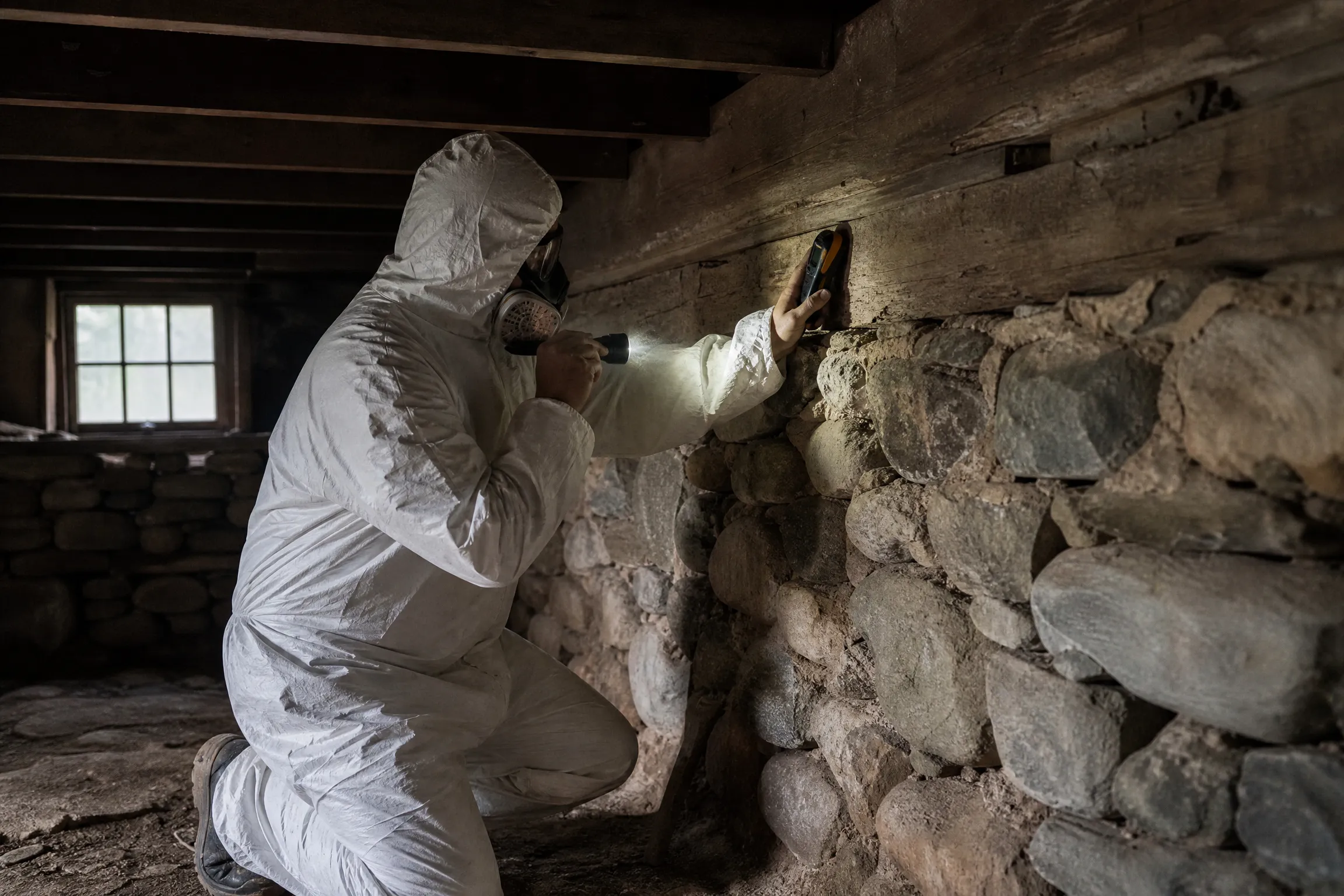
Most Portland-area homes built before 1950 sit on stone, brick, or rubble foundations, beautiful masonry that was never designed to keep water vapor out. Ground moisture wicks through those walls constantly, and the basement stays damp even when the floor looks dry. Add spring snowmelt, clay-heavy soil that drains slowly, coastal humidity all summer, and the occasional sump pump failure, and a Portland basement can hold enough moisture to feed mold twelve months a year.
Basements also make mold easy to ignore. Most of us don't spend time down there, so growth spreads across joists, sill plates, stored boxes, and the back of paneling for months before anyone notices. By the time the musty smell reaches the first floor, the colony is usually well established, and because your furnace or air handler likely lives in the basement, those spores get distributed through the whole house every time the blower kicks on.
Signs You Have Basement Mold
- A musty, earthy smell, especially after rain or in spring
- Dark, green, or white fuzzy staining on joists, sill plates, or the bottom of the stairs
- White crusty deposits (efflorescence) on foundation walls: not mold itself, but proof water is moving through the masonry
- Condensation on cold-water pipes, windows, or ductwork
- Cardboard boxes, fabric, or wood furniture that feel damp
- Allergy symptoms that flare when you spend time downstairs
What the Remediation Crew Actually Does
Every basement job starts by tracing the water: grading and gutter problems outside, foundation seepage, plumbing leaks, dryer venting, or plain old humidity. Then the affected area is sealed off and put under negative air pressure so spores can't migrate upstairs during the work. Mold is physically removed from framing and masonry (HEPA vacuuming, damp wiping, abrasive cleaning where needed), not just sprayed and painted over. Porous materials that can't be saved, like moldy drywall, insulation, or carpet, are bagged and disposed of properly. The space is dried down, treated, and verified clean.
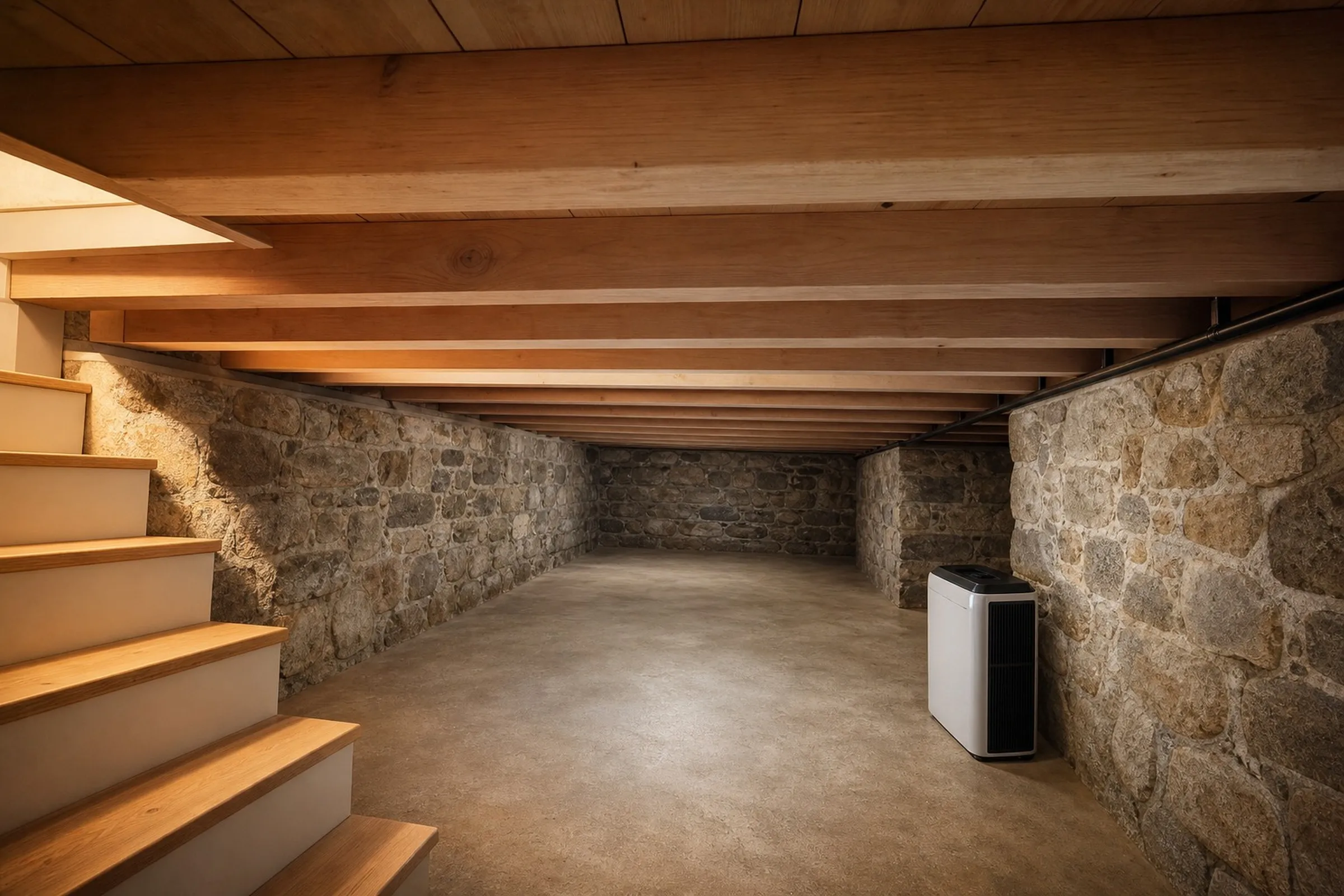
Just as important: you'll leave with a prevention plan (typically some combination of a properly sized dehumidifier, sump/drainage fixes, exterior water management, and ventilation), because removing mold without fixing moisture is renting a solution, not buying one.
Don't Finish a Basement Over a Mold Problem
Thinking about finishing the basement, or buying a Portland home with a finished one? Mold sealed behind framing and drywall is one of the most expensive versions of this problem: the demo doubles the cost. A pre-finish inspection (and remediation if needed) is cheap insurance by comparison. If you're mid-transaction, ask about mold testing and inspection with written clearance documentation.
Common questions
Basement Mold FAQs
How much does basement mold removal cost?
A contained problem (one wall section, a small storage area) often runs $500–$1,500. Full-basement remediation in the Portland area typically falls between $1,500 and $5,000 depending on square footage, how much material has to come out, and whether drainage or drying work is needed. You'll get a real number after inspection, and the quote is free.
Can I just run a dehumidifier and forget it?
A dehumidifier is prevention, not remediation. It will slow future growth, but it doesn't remove established colonies from joists and masonry, and it can't fix active water intrusion. Existing growth needs to be removed first; then the dehumidifier becomes part of keeping the basement dry.
Is mold on floor joists serious?
It deserves prompt attention. Surface mold on joists is common in damp Maine basements and rarely means structural damage by itself, but left wet for years, the same conditions invite rot, and rot is structural. Remediating early is dramatically cheaper than sistering joists later.
Get your basement dry and clean for good
One call gets you honest answers about your basement, a free quote, and a licensed local crew that has seen every version of Portland's wet-basement problem.
Call (207) 569-3512- Licensed & insured local crew
- Free quotes
- Straight answers, no scare tactics