Out of sight shouldn't mean out of mind
Crawl Space Mold Removal in Portland, Maine
Vented crawl spaces were designed for a climate Maine doesn't have. All summer they inhale humid coastal air that condenses on cool framing, and by the time anyone looks down there, the joists are furry. Here's how it gets fixed properly.
Free quotes · Licensed & insured local crew
Why Maine Crawl Spaces Grow Mold
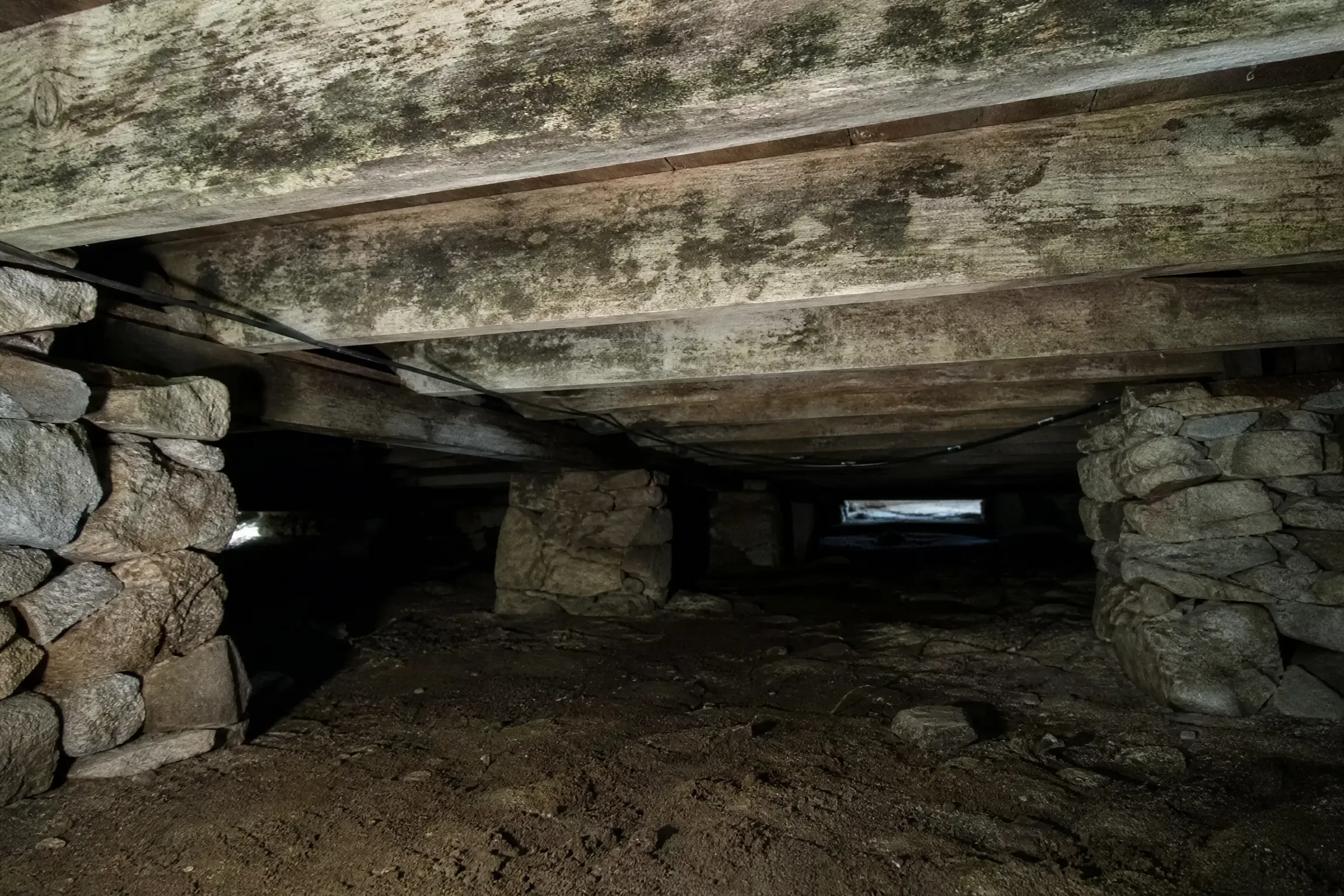
The old building logic went: vent the crawl space and moisture will dry out. In practice, Maine summers push warm, humid air through those vents into a space cooled by the ground, and when humid air meets cool wood, it condenses. Add bare dirt floors that wick ground moisture upward around the clock, plus the occasional plumbing drip nobody sees, and a vented crawl space can sit at mold-friendly humidity from May through October.
Coastal and older homes around Portland, Scarborough, and Cape Elizabeth are especially prone: stone or block piers, dirt floors, and framing that's been absorbing seasonal moisture for decades.
Signs Your Crawl Space Has a Problem
- Musty smell on the first floor, strongest in summer
- Cupping or squeaking hardwood floors above the crawl space
- Visible white, green, or black growth on joists or subfloor
- Standing water or damp soil after rain
- Insulation falling out of the floor bays, damp to the touch
- Allergy symptoms that ease when you leave the house
How the Cleanup Works
Crawl space remediation follows the same discipline as any proper mold remediation (containment, removal, moisture control) adapted to a space you can barely turn around in. The crew works in protective gear, removes mold from joists and subfloor with HEPA vacuuming and hand cleaning, pulls ruined insulation, and treats the cleaned framing. Then comes the part that actually keeps it from coming back: ground vapor barrier, drainage or grading fixes where water is entering, and a dehumidifier or sealed-vent setup where the space needs it.
Worried it's been wet down there for years? That's common; read why old Portland homes grow mold for the bigger picture, or what this typically costs before you call.
Common questions
Crawl Space Mold FAQs
Can I just ignore crawl space mold if I never go down there?
Unfortunately no. The crawl space doesn't stay in the crawl space. Warm air rising through a house (the stack effect) pulls crawl space air up into your living space, so you're breathing a share of whatever grows down there. And the same moisture feeding the mold is soaking your floor framing, which over years invites rot, a structural repair bill far bigger than remediation.
What's the difference between cleanup and encapsulation?
Cleanup removes the existing mold from framing and subfloor. Encapsulation is the prevention layer: a heavy vapor barrier over the ground, sealed vents, and usually a small dehumidifier, which together keep the space dry permanently. Cleanup without addressing moisture invites regrowth; encapsulation over active mold seals in a problem. Done right, cleanup comes first and the encapsulation decision is made with honest numbers.
How much does crawl space mold removal cost?
Cleanup alone typically falls in the $1,500–$5,000 range depending on the size of the space, access, and how much of the framing is affected. Full encapsulation is a separate project with its own price, and it isn't always necessary; sometimes ground vapor barrier plus better drainage does the job. You'll get the options broken out separately, never bundled into one take-it-or-leave-it number.
Stop breathing your crawl space
One call gets you a free quote and a licensed local crew that will actually get under your house and tell you the truth about what's there.
Call (207) 569-3512- Licensed & insured local crew
- Free quotes
- Straight answers, no scare tactics